Choosing the right Metal Saw Blade manufacturer is rarely as simple as comparing prices or counting product lines. In a busy fabrication shop, the real test appears at the cutting table: a hot blade, uneven teeth, vibration, and a stack of steel waiting behind it. The best manufacturers must balance cutting speed, blade life, tooth geometry, material science, and dependable technical support.
Manufacturing quality expert W. Edwards Deming said, “Quality comes not from inspection, but from the improvement of the production process.” That principle fits metal sawing closely. A reliable blade begins with controlled steel selection, accurate heat treatment, consistent welding, and careful quality testing. It also depends on the manufacturer’s understanding of real workshop conditions. Dry cutting, coolant use, machine alignment, and operator habits can change results.
This guide examines ten leading Metal Saw Blade manufacturers through practical criteria. These include product range, carbide and bi-metal technology, tooth durability, cutting accuracy, global availability, and customer support. It also considers feedback from industrial users, because catalog claims do not always survive a twelve-hour production shift.
No ranking is perfect.
A smaller specialist may outperform a global brand in one application. A premium blade may also disappoint when installed on a poorly maintained saw. That is why this comparison avoids one-size-fits-all conclusions. Instead, it highlights where each manufacturer performs strongly, where limitations may appear, and which buyers may benefit most. The final choice should match the metal grade, machine capacity, production volume, and required finish—not merely the brand name.
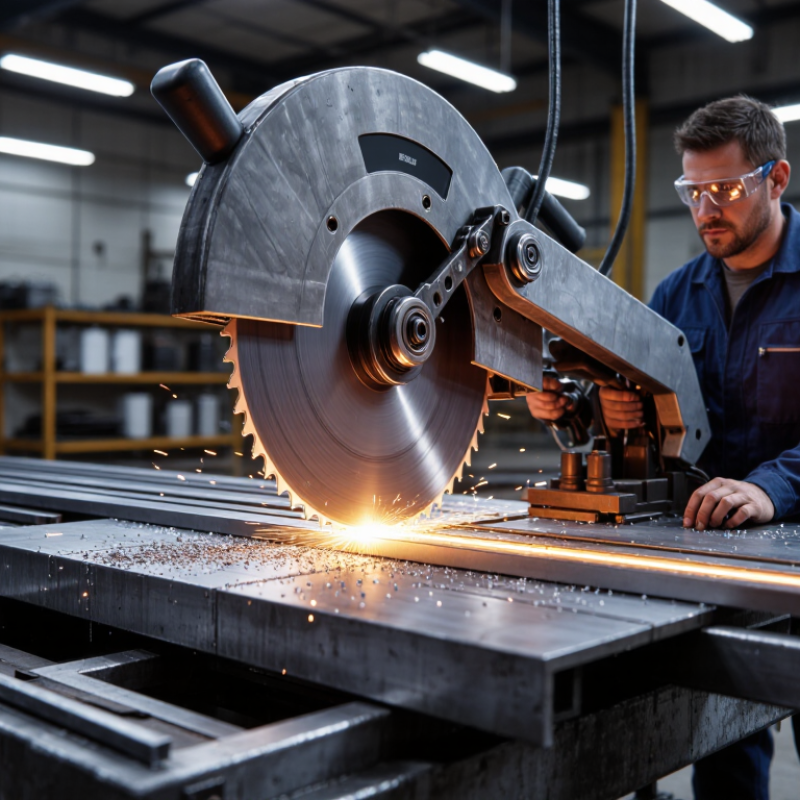
Understanding metal saw blades is essential when comparing the top ten manufacturers. A metal saw blade is a toothed cutting tool designed to remove material from steel, aluminum, copper, and other alloys. Unlike wood blades, it manages higher heat, tougher surfaces, and heavier cutting pressure.
Metal blades are classified by construction, tooth material, tooth pitch, and cutting shape. Common constructions include high-speed steel, carbide-tipped, and bi-metal blades. Bi-metal designs combine a flexible backing with hardened teeth, making them practical for workshop and industrial use.
Carbide teeth usually support faster cutting and longer service life, especially on stainless steel or hardened alloys. Tooth pitch also matters. Coarse teeth remove thick sections quickly, while fine teeth produce steadier cuts on thin tubing and sheet metal. The wrong pitch can cause vibration or premature tooth damage.
Blade geometry provides another useful classification. Raker, variable-pitch, and hook tooth patterns control chip removal and cutting pressure. Band saw blades suit continuous production, while circular blades often deliver accurate, repeatable cuts. In real work, coolant flow, machine alignment, and feed pressure can matter as much as blade quality. A well-made blade can still fail on a poorly adjusted saw. That point is easy to overlook. My practical preference is to match the blade to the alloy, section thickness, and expected cutting volume, then verify results through actual chip shape, heat, and burr formation.
A metal saw blade manufacturer earns industry respect through repeatable performance, not attractive marketing. In workshops, operators notice whether a blade cuts straight after several hours of production. They also track tooth wear, vibration, heat marks, and unexpected replacements. These details reveal more than a sales brochure.
Engineering depth strongly affects reputation. Reliable manufacturers explain tooth geometry, material selection, hardness, and coating choices in practical terms. They test blades on different alloys, thicknesses, and cutting speeds. Independent certifications and documented quality procedures add credibility, especially when test methods are clearly disclosed. Batch traceability matters too. A lot number should connect to inspection records, production dates, and material information.
Service quality often separates a respected supplier from an average one. Technical teams should help users choose blade pitch, tension, and operating parameters without making vague promises. Fast answers are useful. Accurate answers are better. Customer feedback, warranty handling, and replacement policies also expose a manufacturer’s real priorities. Still, no producer is perfect. Some published test results may use cleaner conditions than a busy factory floor, and buyers should question impressive claims. I have found that honest discussions about blade failure often build more trust than claims of flawless performance.
Who are the top 10 metal saw blade manufacturers? The answer depends on the cutting job, not advertising alone.
A useful ranking should include producers known for industrial carbide blades, bi-metal blades, cermet-tipped blades, and abrasive cutting solutions. The strongest manufacturers usually offer controlled tooth geometry, consistent hardness, low blade runout, and clear material specifications.
They also support steel service centers, tube factories, machine shops, and maintenance teams.
In practice, I would compare ten manufacturers through measurable evidence. Check cutting tests on carbon steel, stainless steel, aluminum, and alloy steel. Review blade life, cut straightness, vibration, and average cost per cut. Reliable suppliers provide batch traceability, technical data sheets, replacement guidance, and responsive engineering support.
Factory experience matters too. A blade that performs well at 30 meters per minute may fail at 80 meters per minute.
No ranking is perfect. My judgment could favor manufacturers with better documentation, even when a smaller producer offers excellent results.
Tips: Match tooth pitch to wall thickness. Use a finer pitch for thin tubing. Use a coarser pitch for solid bar. Inspect the first ten cuts for burrs, heat marks, and wandering. Do not judge a blade by sharpness alone. Ask for sample testing before large orders. Check coolant flow, blade tension, and machine alignment as well. These details often decide whether a reputable manufacturer delivers real value.
The top ten metal saw blade manufacturers compete through product breadth and cutting consistency, not slogans. Their portfolios usually include bi-metal band blades, carbide-tipped circular blades, reciprocating blades, and abrasive alternatives. According to the World Steel Association, global crude steel production reached about 1.89 billion tonnes in 2023. That volume supports continued demand for reliable metal-cutting tools, especially in fabrication, automotive, and structural production.
Product differences become clearer at the tooth level. Bi-metal blades combine flexible spring steel backs with hardened high-speed steel teeth. Carbide-tipped blades usually deliver cleaner cuts in stainless steel, aluminum, and hardened alloys. Variable-pitch teeth can reduce vibration, while positive rake angles improve chip removal. A 2024 MarketsandMarkets assessment valued the global saw blades market at roughly 10 billion dollars and projected steady growth through 2028. Market estimates vary, though. Buyers should check the research method before treating any number as absolute.
Technology also separates leading manufacturers. Advanced producers use CNC tooth grinding, laser welding, precision tensioning, and wear-resistant coatings. Some now add sensor-based monitoring for blade load and temperature. These features can extend tool life, but they do not rescue poor blade selection. In practical testing, cutting speed, coolant control, material hardness, and operator technique often matter just as much. This is where comparisons become imperfect. A blade that performs well on thick carbon steel may struggle with thin stainless sheet. Test cuts remain essential.
How do leading manufacturers compare by product and technology? This anonymous benchmark compares commonly used metal saw blade technologies by typical cutting-speed range for carbon and alloy steel.
Higher cutting-speed ranges generally indicate greater productivity potential, while the best choice still depends on material hardness, section size, machine rigidity, tooth pitch, coolant, and feed rate. Values are representative industry guidance rather than company-specific claims.
Choosing the right metal saw blade manufacturer requires more than comparing prices. Start with the cutting job. Identify the metal grade, material thickness, machine type, tooth pitch, and expected cutting speed. A manufacturer with metallurgical expertise should explain why a blade suits your application.
Ask for measurable evidence. Reliable suppliers can provide material specifications, hardness ranges, tooth geometry details, and documented quality checks. Request sample blades for controlled trials. Record cutting time, edge wear, heat buildup, vibration, and the number of acceptable cuts. Small details matter. A blade that cuts quickly but overheats the workpiece may increase production costs.
Review manufacturing consistency, not only product variety. Check whether the supplier uses controlled heat treatment, accurate tooth setting, and regular dimensional inspections. Clear technical support also matters when unusual alloys or bundled materials are involved. Confirm delivery capacity, packaging quality, replacement policies, and communication standards before placing large orders.
A low unit price can hide short service life. Total cost per cut is more useful. In one evaluation, a slightly more expensive blade reduced changes and stabilized output. Still, one trial does not prove everything. Cutting conditions, operator habits, and machine alignment can distort results. Repeat tests under normal shop conditions, and ask the manufacturer to explain failures rather than blame the operator. That response often reveals its real level of expertise.
Buyer-focused evaluation matrix with company names and brand data omitted
| No. | Evaluation Dimension | Verified Technical Options | Why It Matters to Buyers | Evidence to Request |
|---|---|---|---|---|
| 1 | Blade Construction | Carbon steel Bi-metal Carbide-tipped Solid carbide | Different constructions balance cutting speed, toughness, heat resistance, service life, and purchase cost differently. | Product datasheets, cross-sectional construction details, recommended material ranges, and application test results. |
| 2 | Tooth Material and Grade | High-speed steel grades such as M42 or M51 are commonly used in bi-metal blades; carbide tips are used for demanding abrasive or high-temperature applications. | The tooth material strongly affects wear resistance, cutting speed, shock resistance, and compatibility with the workpiece. | Tooth-material specification, hardness data, metallurgical certificates, and grade-specific cutting recommendations. |
| 3 | Tooth Geometry | Regular tooth Variable pitch Hook tooth Raker set | Tooth geometry influences chip formation, vibration, noise, cutting stability, and performance on solid or structural sections. | Tooth-form drawings, pitch charts, set specifications, and recommended geometries for tubes, profiles, solids, and bundles. |
| 4 | Size and Format Range | Bandsaw blades are supplied as rolls or welded endless loops; circular blades are specified by outside diameter, bore, kerf, and tooth count. | A broad size range helps buyers standardize purchasing across different machines and production lines. | Dimensional catalog, tolerance range, welding capability, bore and kerf options, and machine-compatibility list. |
| 5 | Pitch Selection | Tooth pitch is selected according to workpiece thickness and shape. Variable-pitch blades help reduce harmonic vibration across changing sections. | Correct pitch improves chip clearance and prevents tooth stripping, premature dulling, excessive vibration, or slow cutting. | Workpiece-thickness chart, teeth-per-inch guidance, variable-pitch chart, and recommended blade-speed settings. |
| 6 | Target Materials | Carbon steel Stainless steel Tool steel Aluminum alloys Nickel alloys | Steel, stainless steel, aluminum, and nickel-based alloys require different tooth loads, speeds, feeds, and blade constructions. | Material-specific cutting tables, sample-cut records, recommended coolant practices, and application references. |
| 7 | Manufacturing Quality Control | Key controls include strip thickness, tooth height, tooth set, weld strength, hardness, straightness, and dimensional consistency. | Consistent blade geometry reduces premature failure and improves repeatability in automated or high-volume cutting. | Inspection plans, control charts, calibration records, weld-testing procedures, and nonconformance handling process. |
| 8 | Quality Management System | ISO 9001 is an internationally recognized quality-management standard. Environmental and occupational-safety systems may include ISO 14001 and ISO 45001. | Documented management systems can improve process control, traceability, corrective actions, and supplier accountability. | Current certificates, certification scope, issuing body, validity dates, and factory audit reports. |
| 9 | Application Engineering Support | Support should cover blade selection, machine setup, blade tension, break-in procedure, cutting speed, feed pressure, and coolant selection. | Technical guidance can shorten trial periods and reduce common problems such as tooth stripping, overheating, vibration, and premature wear. | Application manuals, troubleshooting guides, response-time commitments, training availability, and cutting-trial reports. |
| 10 | Total Cost of Ownership | Evaluate purchase price together with blade life, cutting time, weld failures, changeover labor, scrap rate, coolant use, and cost per cut. | The lowest unit price does not necessarily produce the lowest cost per cut or the highest equipment productivity. | Comparable trial data, cost-per-cut calculations, expected blade life, lead time, warranty terms, and replacement policy. |