How to Choose the Right Ball Bearing for Your Project?
Choosing the right Ball Bearing for your project can be daunting. There are many options available, and each serves a unique purpose. Understanding the specifications and performance requirements is crucial.
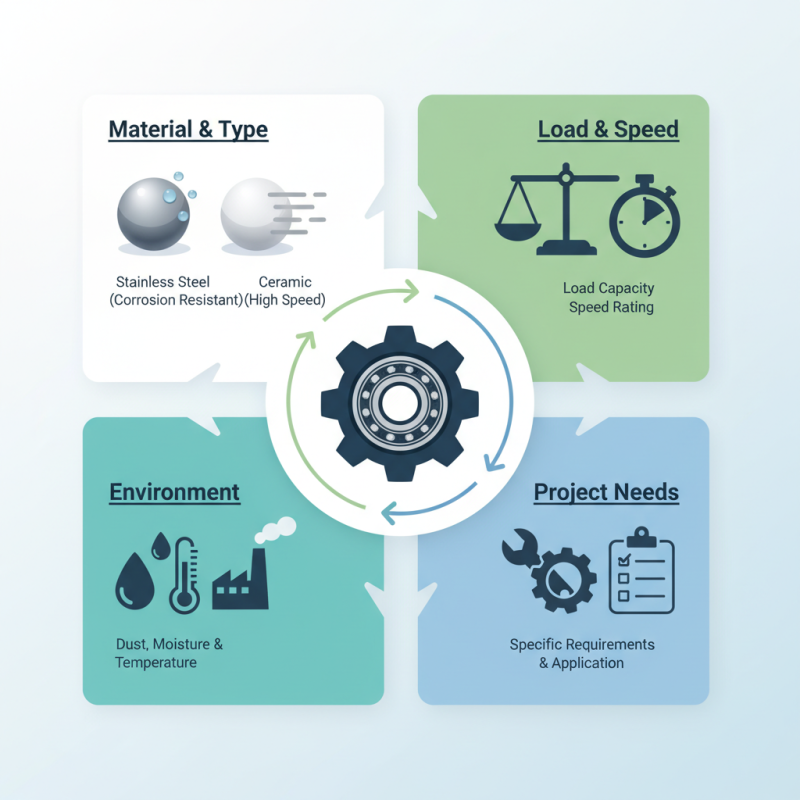
Ball bearings reduce friction and enable smooth movement in machinery. They come in various sizes, materials, and types. For instance, stainless steel bearings are resistant to corrosion. On the other hand, ceramic bearings offer high-speed capabilities.
It’s essential to evaluate the load capacity and speed ratings of your chosen ball bearing. A mismatch can lead to premature failure or inefficiency. Often, people overlook the environment where the bearing will operate. This can affect its lifespan and functionality. Hence, reflecting on your specific needs is important.
Understanding Ball Bearings: Types and Applications
When choosing a ball bearing, understanding the types and their applications is crucial. Ball bearings come in various designs, each suited for specific tasks. Common types include deep groove, angular contact, and self-aligning bearings. Deep groove bearings are versatile and used in many devices. Angular contact bearings are great for handling axial loads. Self-aligning bearings adapt to shaft misalignments.
Tips: Consider the load capacity when selecting bearings. Will it handle heavy loads? Also, think about the speed. Some bearings perform better at high speeds.
Every project has unique requirements. You may find that the perfect bearing isn't the one you initially imagined. Testing different types can yield surprising results. It's okay to make mistakes. Those errors lead to better choices in the future.
Tips: Think about environmental factors too. Will it be exposed to moisture or dust? Choose a housing solution to protect the bearings.
Key Factors to Consider When Choosing Ball Bearings
When selecting ball bearings for your project, several key factors come into play. The load capacity is crucial. Determine if your application requires radial or thrust load handling. Each bearing type serves different purposes. Consider the environment as well. Humidity, dust, and temperature can affect performance. Choose bearings with proper sealing and materials to withstand harsh conditions.
Speed ratings also matter. Bearings have limits on how fast they can rotate. Exceeding these limits can lead to failure. Pay attention to the noise levels as well. Some applications demand quieter operations. Selecting a bearing with the right noise rating can enhance user experience.
Don’t overlook fit and clearance. Tolerances must align with your assembly requirements. A tight fit might reduce wear but could lead to overheating. Meanwhile, a loose fit may cause rattling or premature wear. Reflecting on these factors can improve your decision-making process. The right choice can ultimately lead to better project outcomes. Remember, a little diligence during selection makes a difference.
Material Selection: Metal vs. Plastic Ball Bearings
When selecting ball bearings for a project, the choice between metal and plastic is crucial. Metal ball bearings are known for their durability. They can withstand high loads and extreme temperatures. Stainless steel is common in high-stress applications. However, they can rust if not properly maintained. This can lead to increased friction and eventual failure.
On the other hand, plastic ball bearings offer a lighter alternative. They resist corrosion and typically require less lubrication. This can be beneficial for applications exposed to moisture. However, they may not handle heavy loads effectively. The risk of wear and tear in harsh conditions is higher. The right choice often depends on specific project demands. Think about the environment and requirements carefully. Sometimes, using a mix of materials is a practical solution, balancing performance and cost.
Load Ratings and Performance Metrics Explained
Selecting the right ball bearing for your project involves understanding load ratings and performance metrics. Load ratings indicate how much weight a bearing can handle without failure. There are two key ratings: dynamic and static. Dynamic load rating shows the bearing's capacity during movement, while static load rating reflects its capacity when stationary. Knowing these figures is crucial for ensuring optimal performance.
When examining performance metrics, consider factors like speed and operating temperature. High-speed applications demand specific materials and designs. Likewise, the temperature can significantly affect bearing life. Heat generated by friction can reduce effectiveness. You might need to reassess choices if parts overheat frequently.
Tips: Always match the bearing type with your project’s requirements. For heavy loads, prioritize bearings with higher static ratings. Monitor the bearings regularly. Recognizing early signs of wear can prevent unexpected failures. Keep your application’s environment in mind—moisture and dust can impact performance. Misjudging these aspects can lead to costly mistakes.
Maintenance and Longevity: Ensuring Optimal Bearing Function
When selecting a ball bearing, maintenance and longevity are key considerations. Proper maintenance can significantly extend the lifespan of bearings. According to industry data, regular inspection and lubrication can enhance their performance by up to 30%. If a bearing is not properly maintained, wear can occur quickly, reducing efficiency.
Choosing the right lubricant is critical. Different applications require specific types of grease or oil. A mismatch can lead to failure. The National Lubricating Grease Institute states that improper lubrication is a common cause of bearing wear. Additionally, environmental factors play a role. Dust, moisture, and extreme temperatures can compromise bearing functionality.
Regular monitoring is also essential. Vibration analysis can provide insights into bearing condition. Studies indicate that predictive maintenance improves overall reliability by 25%. Some users overlook this step, potentially leading to failure. Balancing between usage and maintenance demands careful consideration. The choice of bearing is only the start; ongoing care is crucial for optimal function.
How to Choose the Right Ball Bearing for Your Project? - Maintenance and Longevity: Ensuring Optimal Bearing Function
| Bearing Type | Load Capacity (lbs) | Speed Rating (RPM) | Material | Operating Temperature (°C) | Maintenance Interval (hrs) |
| Deep Groove Ball Bearing | 500 | 2000 | Steel | -20 to 120 | 3000 |
| Angular Contact Ball Bearing | 700 | 1500 | Ceramic | -30 to 140 | 4000 |
| Self-Aligning Ball Bearing | 600 | 1800 | Stainless Steel | -20 to 150 | 5000 |
| Thrust Ball Bearing | 300 | 1000 | Chrome Steel | -20 to 110 | 2500 |
| Miniature Ball Bearing | 100 | 8000 | Plastic | 0 to 60 | 1000 |