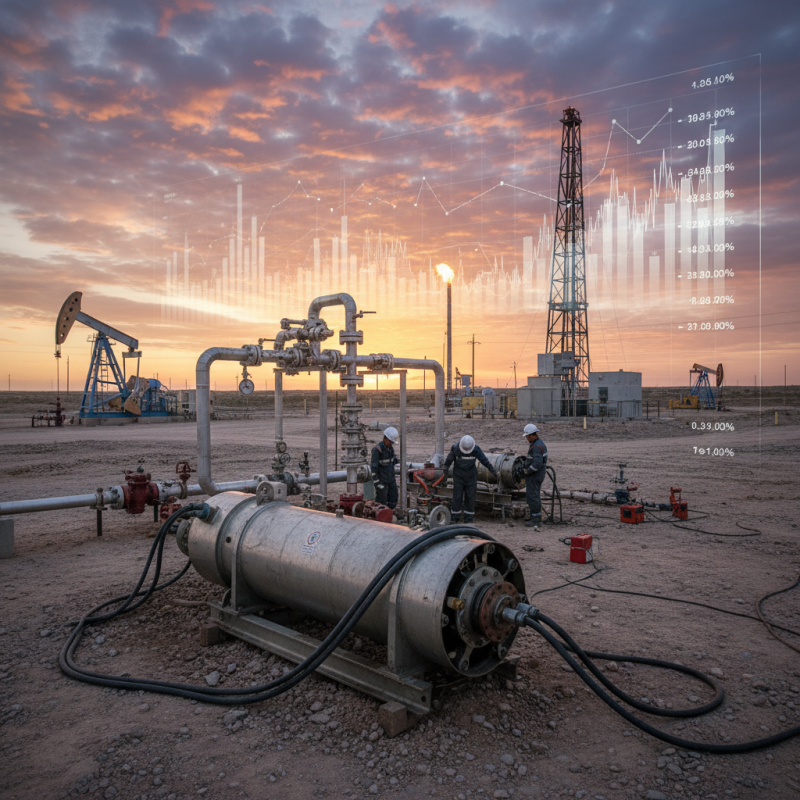
How to Choose the Right Artificial Lift Technology for Your Well?
Choosing the right artificial lift technology for your well is crucial for optimizing production. Artificial Lift Technologies are essential in enhancing oil recovery from wells. Many options exist, each with unique benefits.
Consider the type of well that requires the lift. Is it a deep well or a shallow one? Pumping efficiency varies based on depth and fluid characteristics. Electric submersible pumps (ESP) might suit deeper wells. Yet, they share challenges in maintenance and cost.
Reflection is needed on production goals and budget. Sometimes, less expensive options like artificial gas lift can offer simplicity. Reviewing past performance data can reveal insights. It’s not always clear which technology will provide the best outcome. Each choice has trade-offs that require careful consideration.
Understanding Artificial Lift Technologies and Their Importance
Artificial lift technologies are crucial in enhancing oil and gas production. Understanding these technologies helps ensure the right choice for your well. Each method has its unique advantages and limitations. Selecting the right one depends on various factors, including reservoir characteristics, well depth, and economic conditions.
When evaluating options, consider the application. For instance, rod pumps work well in shallow wells, while electric submersible pumps suit deeper reservoirs. Ensure you assess the production rates required. Misjudging your needs can lead to inefficient operations.
Tips: Focus on monitoring your well's performance regularly. Simplistic metrics can be misleading. Data analysis plays a vital role in optimizing your choice. Seek expert opinion if unsure about specific technologies. Making a hasty decision can lead to costly mistakes that might affect long-term production. Remember, there is no one-size-fits-all solution in artificial lift technologies.
Factors Influencing the Selection of Artificial Lift Methods
Choosing the right artificial lift technology is vital for optimizing well performance. Several factors influence this decision. Understanding your well's specific conditions is crucial. Every well is unique, affecting the selection process.
Production rate is a significant factor. Low flow rates may benefit from simpler solutions, while high rates can necessitate more complex treatments. Consider depth, temperature, and pressure. These elements can guide you toward the most effective artificial lift method.
Tips: Evaluate existing equipment. Sometimes upgrading can yield better results. Consult with field experts to gain insights that might not be obvious. Avoid hastily choosing a method without thorough assessment. Systems may appear efficient but can lead to increased costs over time. It's okay to reassess your choice after implementation, as conditions may change.
Cost analysis is another critical factor. Installation and maintenance expenses differ across technologies. Selecting an economical option can seem attractive, but it’s essential to avoid compromising efficiency. It’s better to invest in a reliable system than to face frequent repairs.
Tips: Create a budget that includes potential delays. An unexpected issue can inflate costs. Reflect on past experiences; learning from them is key to future selections.
Common Types of Artificial Lift Technologies Explained
When selecting artificial lift technology for wells, understanding the common types is crucial. One popular option is electrical submersible pumps (ESPs). These pumps are effective in deep wells and can handle high production rates. However, they require significant maintenance and can be costly to operate. Their efficiency can diminish over time.
Another choice is gas lift systems. This technology uses gas to reduce fluid density. As a result, it enables easier fluid flow. Gas lift is flexible and can be adapted to various well conditions. Nonetheless, it might not perform well in all environments. Poor gas supply could lead to inefficiencies.
Lastly, rod pumps are common for shallow wells. They provide reliable performance and are relatively simple to install. Yet, they may struggle with high-viscosity fluids. The wear and tear on equipment should also be considered. Ultimately, each lift method has advantages and drawbacks, making careful selection essential.
Evaluating Well Characteristics for Optimal Lift Technology Choice
When choosing the right artificial lift technology, evaluating well characteristics is crucial. Each well has unique features influencing lift performance. Depth, reservoir pressure, and fluid composition play significant roles. Deep wells often require more robust solutions. High reservoir pressure might favor certain technologies. Understanding these factors helps narrow down options.
Fluid type can complicate decisions. For instance, a well producing heavy oil may not respond well to gas lift systems. In contrast, electric submersible pumps may excel in such scenarios. It’s not always clear-cut. Sometimes, unexpected challenges arise. A specific technology may fail to perform as predicted. Adaptation and flexibility in decision-making are essential.
Additionally, production goals and cost considerations cannot be ignored. A high initial investment might promise better long-term returns. However, it’s essential to evaluate whether the technology fits within budget constraints. Not every choice leads to success. Real-world testing and adjustments are often necessary. Each well teaches something new about lift technology’s effectiveness.
Comparison of Artificial Lift Technologies Based on Well Characteristics
Cost-Benefit Analysis of Different Artificial Lift Systems
Choosing the right artificial lift technology for your well is critical. Each system has unique costs and benefits. A comprehensive cost-benefit analysis helps operators make informed decisions. For example, electrical submersible pumps (ESPs) often have higher initial costs but can yield greater production rates. In contrast, gas lift systems may be cheaper but typically operate at lower efficiency.
According to industry reports, the average CAPEX for ESPs can reach $80,000 per unit, while gas lift systems may start around $20,000. However, ongoing OPEX for ESPs usually is higher due to maintenance needs. Operators should consider these metrics carefully. Ultimately, the choice may depend on expected well production and economic conditions.
Tips: Evaluate your well's specific conditions. Analyze factors like depth, flow rate, and fluid type. Consider long-term production forecasts. Don’t overlook the impact of installation complexity on costs. A system may look cost-effective initially but could lead to hidden expenses down the line. Remember not every system works for every well. Reflect on what truly fits your project's needs.