10 Tips for Choosing Molybdenum Sheet

Choosing the right MOLYBDENUM SHEET is a technical decision, not a simple price comparison. In a furnace, vacuum chamber, or high-temperature fixture, a small chemistry difference can affect service life. The U.S. Geological Survey’s Mineral Commodity Summaries 2025 identifies molybdenum as an important alloying material for steels, superalloys, catalysts, and chemical applications. This broad demand makes material traceability increasingly important.

ASTM B386 provides a recognized specification for molybdenum and molybdenum-alloy plate, sheet, and strip. It addresses grades, dimensions, mechanical requirements, and testing expectations. Still, a standard is only useful when the supplier provides clear certificates and consistent inspection records. Ask about purity, alloy grade, thickness tolerance, surface condition, flatness, grain structure, and delivery condition. These details become visible when a thin sheet warps, cracks during forming, or shows uneven discoloration after heating.

The International Molybdenum Association also highlights molybdenum’s value in high-temperature and demanding industrial environments. Yet performance depends on the complete application, including atmosphere, load, heating cycles, and fabrication method. No checklist removes every risk. That is worth remembering. A supplier may offer an attractive specification but lack practical experience with your operating conditions. The following ten tips connect published standards, engineering judgment, and real purchasing checks. They help buyers compare MOLYBDENUM SHEET more reliably, reduce avoidable defects, and ask better questions before production begins. Good documentation matters. So does a sample.
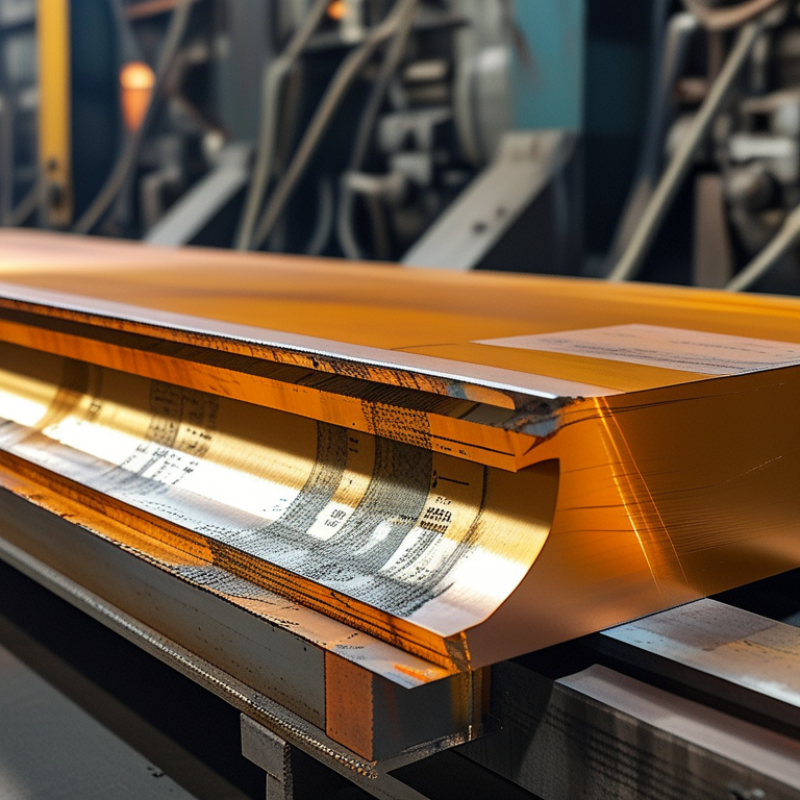
10 Tips for Choosing Molybdenum Sheet

Define the Requirements for Your Molybdenum Sheet

10 Tips for Choosing Molybdenum Sheet

Define the Requirements for Your Molybdenum Sheet

Start with service conditions. Record operating temperature, atmosphere, load, thickness, width, and expected service life. Molybdenum melts at approximately 2,623°C, according to the NIST Chemistry WebBook. However, its performance depends strongly on oxygen exposure and temperature cycling. Do not guess.

Specify the grade and purity before requesting quotations. High-purity sheet may suit vacuum furnaces, electronic components, or high-temperature fixtures. Alloyed grades can improve strength or recrystallization resistance. ASTM B386 provides relevant requirements for molybdenum and molybdenum alloy plate, sheet, and strip. Ask for chemical analysis, tensile data, hardness, grain condition, and dimensional tolerances. Surface roughness and edge quality also deserve written limits.

Check whether the material has been rolled, annealed, or stress-relieved. These conditions affect bending, machining, and cracking during installation. The USGS Mineral Commodity Summaries 2024 reported global mined molybdenum production of about 260,000 metric tons in 2023. That figure describes supply, not sheet quality. Batch traceability remains essential. Request mill certificates and independent test records when the application is safety-critical. Small details matter.

Thermal expansion should be compared with mating materials, especially in repeated heating cycles. NIST data lists molybdenum’s expansion as relatively low compared with many structural metals. Still, design assumptions can fail near joints, fasteners, and sharp corners. A trial piece is often wiser than a large purchase. My own caution is simple: a specification can look complete while missing the actual atmosphere, surface condition, or forming method.

Compare Purity Grades and Material Specifications

10 Tips for Choosing Molybdenum Sheet

Purity is only one part of a reliable molybdenum sheet specification. Common grades include 99.95%, 99.97%, and 99.99% molybdenum. Higher purity can reduce contamination during vacuum heating, sputtering, and high-temperature furnace work. However, not every 99.99% sheet is better. A verified certificate should show tungsten, iron, nickel, carbon, oxygen, and nitrogen levels. Compare these values with the limits in ASTM B386/B386M, which covers molybdenum and molybdenum-alloy plate, sheet, and strip.

Material form also affects service life. Check thickness tolerance, width, flatness, surface finish, grain condition, tensile strength, and elongation. Recrystallization behavior matters when the sheet will face repeated heating. A dense, bright surface may look ideal, yet microscopic rolling marks can influence coating adhesion. Ask for heat-treatment records and traceable lot numbers. Small details matter.

The U.S. Geological Survey’s Mineral Commodity Summaries 2024 estimated global molybdenum mine production at about 260,000 metric tons in 2023. This figure reflects a substantial industrial supply, but it does not guarantee consistent sheet quality. Refined powder source, pressing, sintering, rolling, and annealing can change performance. One practical mistake is choosing purity before defining the working temperature and atmosphere. Recheck the specification. A lower-purity sheet may perform adequately in a noncritical structural application, while a small interstitial difference could matter greatly in vacuum equipment. Supplier data should be independently reviewed when failure costs are high.

10 Tips for Choosing Molybdenum Sheet — Compare Purity Grades and Material Specifications

Higher-purity molybdenum sheet generally provides lower impurity content and more consistent performance in high-temperature, vacuum, and semiconductor applications. The chart compares commonly specified purity levels; actual limits should always be confirmed against the material certificate and applicable specification.

Specification Typical Reference Value Selection Tip
Purity grade 99.95%–99.99% Mo Match purity to contamination-control requirements.
Density Approximately 10.28 g/cm³ Use for weight and dimensional calculations.
Melting point Approximately 2623°C Confirm operating temperature and atmosphere.
Thermal conductivity Approximately 138 W/m·K at room temperature Consider heat-spreading and thermal-gradient requirements.
Coefficient of thermal expansion Approximately 4.8 µm/m·K at room temperature Check compatibility with joined or coated materials.
Sheet condition Annealed, stress-relieved, or cold-worked Choose condition according to forming and flatness needs.

Reference values are representative engineering data for commercially available molybdenum and may vary with grade, processing condition, temperature, thickness, and test method. Verify chemistry, thickness tolerance, flatness, surface finish, mechanical properties, and applicable standards before purchasing.

Select the Appropriate Sheet Thickness and Dimensions

Choosing molybdenum sheet starts with thickness, not price. ASTM B386/B386M covers molybdenum and molybdenum-alloy plate, sheet, and strip, including dimensional requirements. Match the thickness to heat load, span, and forming method. Thin sheet reduces weight, but it may warp during welding or thermal cycling. Thick sheet offers rigidity, yet it increases machining time and material waste. Keep a practical margin for grinding, surface finishing, and edge trimming. Sometimes, engineers specify more thickness than the design truly needs.

Dimensions require equal attention. Define length, width, flatness, edge condition, and allowable tolerances before requesting a quotation. A 300 × 300 mm sheet may not fit a fixture if cutting loss is ignored. Leave machining allowance when the final part needs accurate holes or sealing faces. USGS Mineral Commodity Summaries 2024 reported approximately 260,000 metric tons of global mined molybdenum production in 2023, showing why efficient material use matters. Molybdenum has a density near 10.28 g/cm³, so a small thickness increase adds noticeable weight. Check the drawing twice. In practice, thickness tolerance can matter more than nominal size, especially for furnace shields and high-temperature supports. A better choice is not always the thickest sheet; it is the sheet that survives service without creating avoidable fabrication problems.

10 Tips for Choosing Molybdenum Sheet - Select the Appropriate Sheet Thickness and Dimensions

Tip Selection Factor Recommended Sheet Thickness Typical Dimensions Suitable Use Important Consideration
1 Match thickness to structural load 0.10–0.50 mm for light covers; 0.50–2.00 mm for moderately rigid parts Small parts: 50 × 100 mm to 300 × 300 mm Shields, spacers, diaphragms, and formed components Thicker sheets resist bending but require greater forming force and may increase machining cost.
2 Consider high-temperature exposure 0.50–3.00 mm for furnace parts and thermal shields 100 × 200 mm to 600 × 1,200 mm Heat shields, furnace supports, and hot-zone components Molybdenum has a melting point of approximately 2,623°C, but oxidation becomes a major concern in air at elevated temperature.
3 Choose the correct material grade 0.25–3.00 mm, depending on strength and temperature requirements Up to approximately 600 × 1,200 mm for many fabricated parts Pure molybdenum for general vacuum and high-temperature applications; molybdenum alloys for improved strength Alloy selection should be based on operating temperature, mechanical load, atmosphere, and forming requirements.
4 Allow for thermal expansion 0.50–2.00 mm for flat panels exposed to repeated heating and cooling 100 × 300 mm to 500 × 1,000 mm Thermal barriers, furnace liners, and electrical heating assemblies Molybdenum’s linear thermal expansion is relatively low, approximately 4.8 × 10⁻⁶/°C near room temperature, but clearance is still necessary.
5 Select a thinner sheet for precision forming 0.05–0.30 mm for fine shields, tabs, and small formed parts 25 × 50 mm to 200 × 300 mm Precision masks, thin electrical shields, and laboratory components Thin molybdenum sheet is less tolerant of sharp bends; use generous bend radii and controlled tooling.
6 Use greater thickness for wear resistance 1.00–3.00 mm for contact plates, liners, and wear surfaces 100 × 100 mm to 400 × 800 mm High-temperature contact plates, liners, and support surfaces Molybdenum has good high-temperature strength, but surface finish and support conditions strongly affect service life.
7 Evaluate electrical and thermal conductivity 0.10–1.00 mm for electrical shields and conductive components 50 × 100 mm to 300 × 600 mm Electrodes, conductive shields, and heat-spreading parts Molybdenum’s thermal conductivity is approximately 138 W/(m·K) at room temperature; actual performance varies with purity and temperature.
8 Check flatness and surface condition 0.20–2.00 mm for flat precision panels 200 × 300 mm to 600 × 1,200 mm Vacuum chamber shields, apertures, and precision mounting plates Specify thickness tolerance, flatness, surface roughness, and edge condition separately; nominal dimensions alone are insufficient.
9 Plan cutting and machining allowances 0.50–3.00 mm when machining holes, slots, or complex profiles Finished part size plus a practical machining allowance CNC-machined fixtures, brackets, and custom plates Molybdenum is dense, hard, and relatively brittle at room temperature; use rigid tooling and avoid excessive cutting forces.
10 Confirm the final size against handling and installation limits 0.30–2.00 mm for general-purpose panels and inserts Common working sizes: 300 × 600 mm, 500 × 1,000 mm, and 600 × 1,200 mm General furnace components, shielding panels, and replacement inserts Larger sheets can reduce joints but are heavier; molybdenum density is approximately 10.28 g/cm³.

Note: The thicknesses and dimensions shown are practical selection ranges. Final specifications should be confirmed against the component drawing, operating atmosphere, temperature cycle, load, tolerances, and fabrication method.

Evaluate Surface Finish, Flatness, and Manufacturing Quality

Choosing molybdenum sheet requires more than checking thickness and dimensions. Surface finish can reveal how carefully the material was processed. A clean, uniform surface should show no deep scratches, peeling, pits, or visible contamination. Under angled light, small defects become easier to notice. A rough finish may increase friction or create stress concentration during high-temperature service.

Flatness deserves equal attention. Place the sheet on a certified flat table and inspect gaps with a feeler gauge. Warped edges can cause poor contact in thermal assemblies. Do not rely only on a visual check.

I once accepted a sheet that looked flat, but it lifted slightly at one corner. That shortcut was a mistake.

Measure several locations, especially near the edges and corners.

Manufacturing quality also depends on rolling, annealing, cutting, and cleaning controls. Ask for material certificates, dimensional inspection records, and traceability information. Confirm that the stated purity matches your application. Consistent thickness usually indicates better process control, but it is not proof by itself. Check burrs along cut edges and examine whether they could damage nearby parts. No inspection method is perfect. When the sheet will face repeated thermal cycling, request sample testing or an agreed acceptance standard. Clear records make quality easier to verify.

Verify Suppliers, Testing Standards, and Total Cost

Tip 1: Verify the supplier’s production experience with molybdenum sheet. Ask for recent certificates, equipment details, and traceable heat numbers. A polished website proves little.

Tip 2: Request a small sample before placing a large order. Measure thickness, flatness, edge quality, and surface condition yourself. Tip 3: Confirm the material grade and chemistry against the required specification. Impurity levels can affect strength, conductivity, and high-temperature performance. Tip 4: Define testing standards in writing. Depending on the application, require dimensional inspection, chemical analysis, tensile testing, or ultrasonic examination. Do not accept “tested” without a referenced method.

Tip 5: Check whether reports identify the batch, test date, laboratory, and acceptance limits. Independent verification adds confidence, especially for critical components. Tip 6: Compare suppliers using total cost, not only the quoted kilogram price. Include cutting, packaging, freight, inspection, taxes, machining, and possible scrap. Tip 7: Review minimum order quantities and delivery promises carefully. A low price is useless if production waits six weeks. Tip 8: Ask how the sheet is packed against scratches, moisture, and bending. Thin sheets can arrive damaged despite excellent material quality. Tip 9: Calculate usable yield from the requested dimensions. Oversized sheets may create expensive offcuts. Tip 10: Discuss corrective action before purchasing. If results fail, clarify replacement, retesting, and documentation procedures. This detail is often missed.

Keep every requirement measurable. Vague language creates disputes. One practical lesson remains uncomfortable: even a reputable supplier can make an occasional mistake. Build inspection time into the project.